Unlocking the Future of Design: Unexpected Insights from Stockholm Design Week 2024
Amidst the vibrant commotion of neon displays and stylish outfits, I approached my first exhibit of Stockholm Design Week. But instead of the usual minimal white surfaces and clean lines, I was faced with the unexpected — a 3m tall acoustic partition made of dried purple flowers, illuminated by soft lighting, and accompanied with a series of floating felt orbs by Slalom. As a first-time attendee of Stockholm Design Week and its cornerstone event, the Stockholm Furniture Fair, I was immediately drawn into a world where design collides with sustainability. Little did I know, this exhibit was just the beginning of an eye-opening journey into the future of design. Here are a few unexpected takeaways from my time in Stockholm.
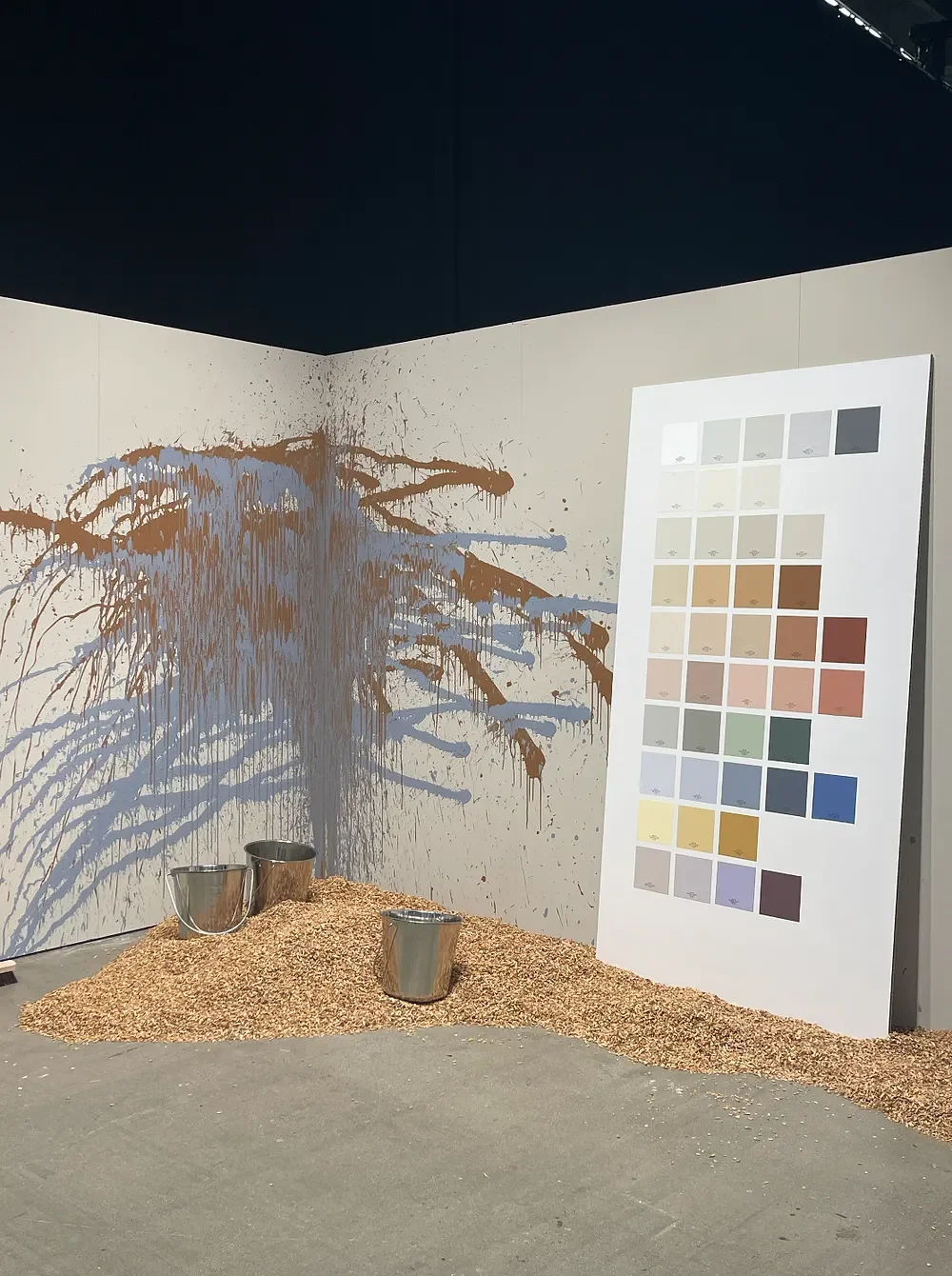
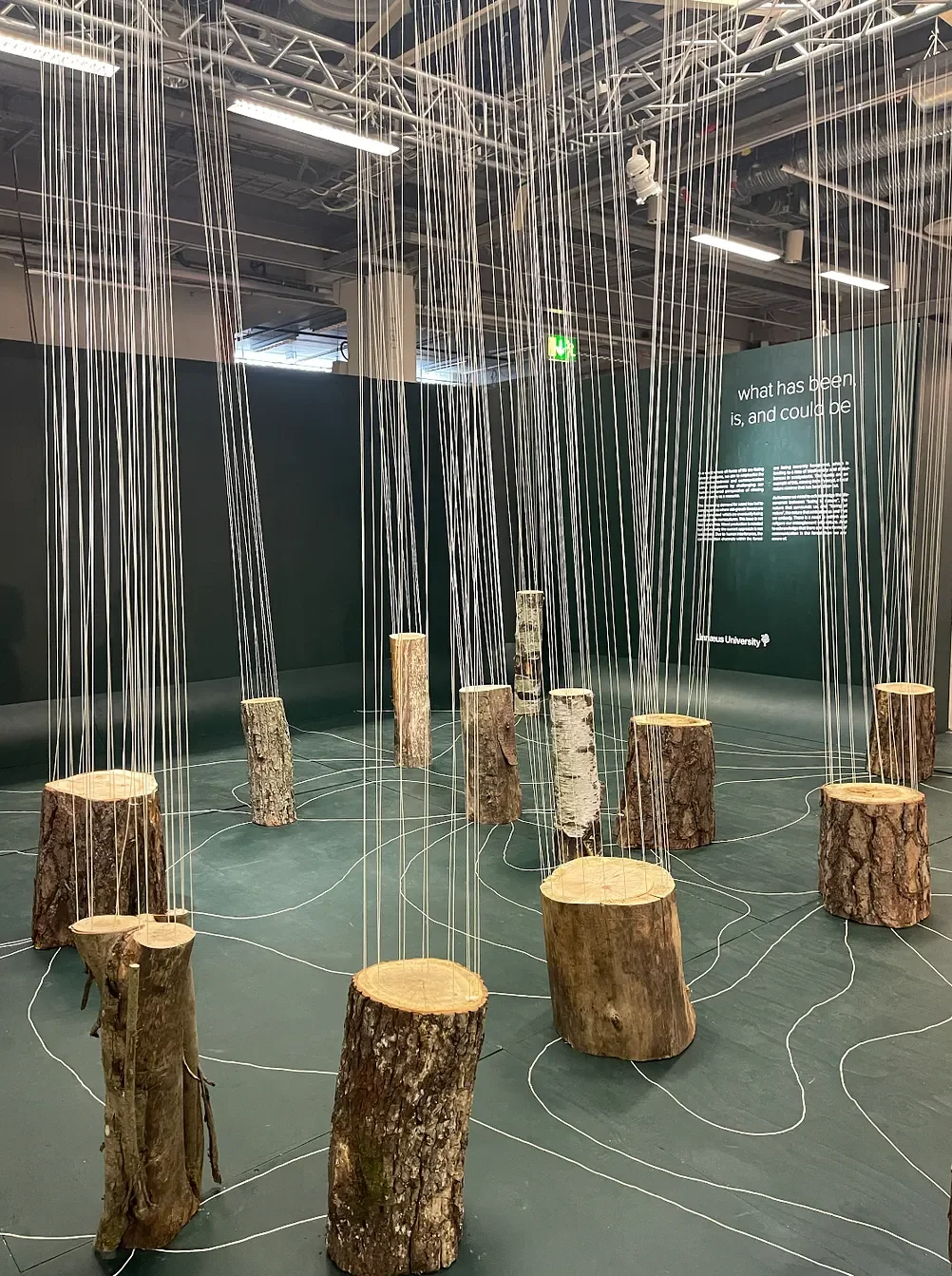
Linnaeus University “What has been, is, and could be”, Toniton ecological paint, Stockholm Furniture Fair 2024
Sustainability is at the center of the design industry.
While sustainability is an ongoing conversation worldwide, I was pleasantly surprised to discover its prominent role at a consumer-centered expo. Conversations with various brands revealed a commitment to integrate biodegradable materials, renewable energy, and trailblazing business models aimed at reducing environmental impact. For instance, Norwegian brand Minus Furniture manufactures their Minus chair using local renewable energy resources, upcycled biomass, and employs a subscription model to optimize material lifespan.
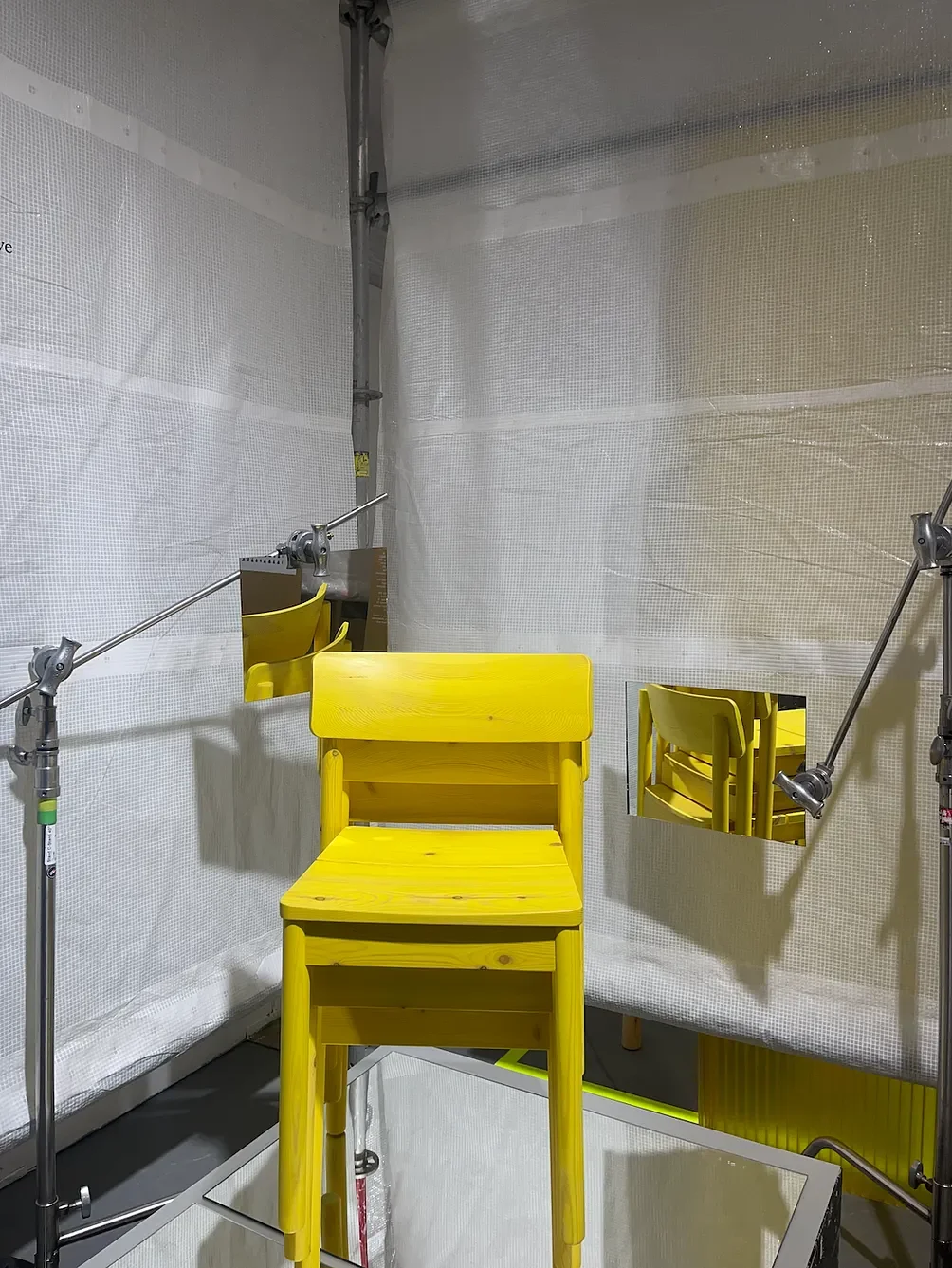
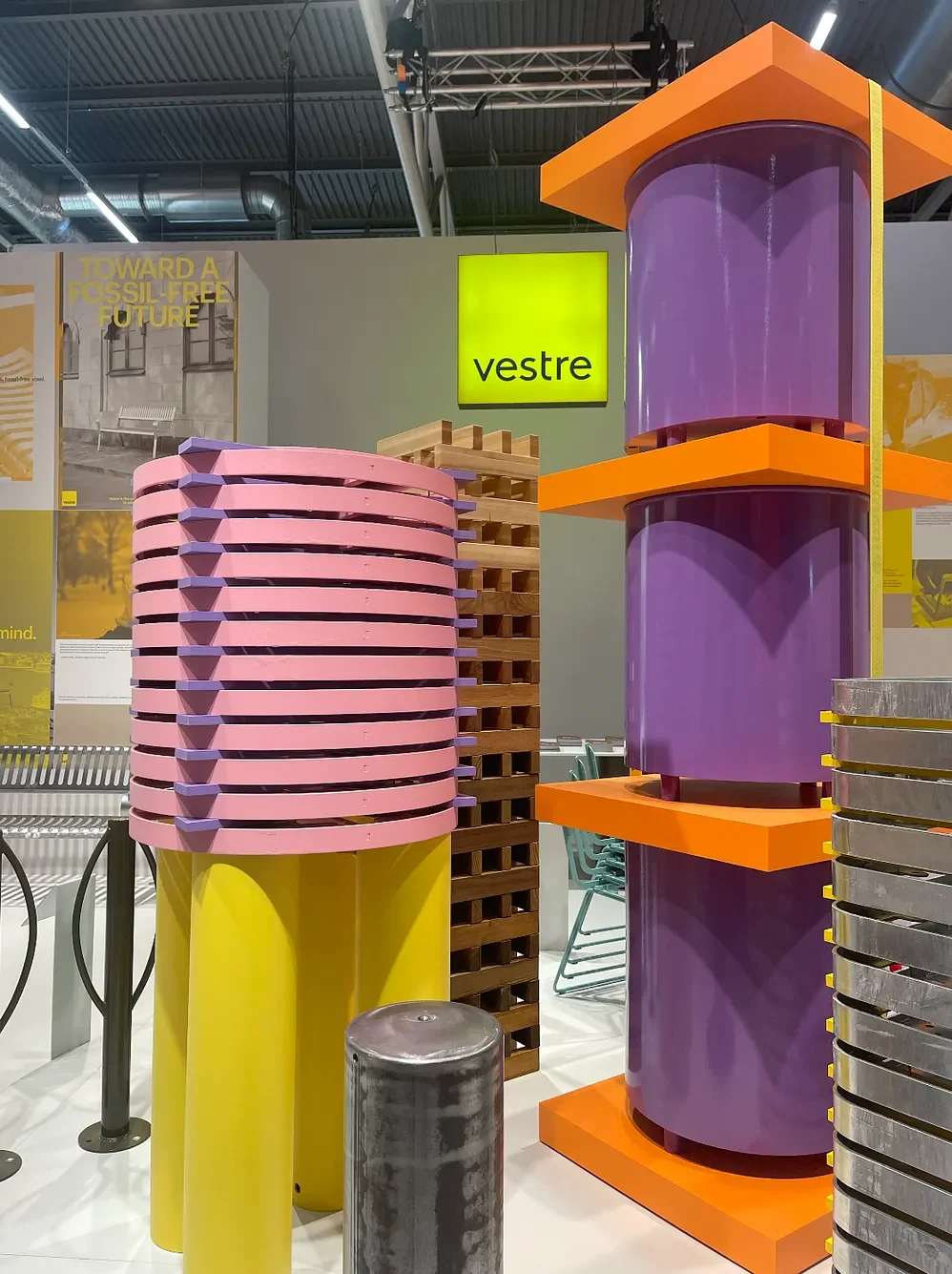
Minus Furniture “New perspectives”, Vestre, Stockholm Furniture Fair 2024
I also had the pleasure of meeting the Vestre team, pioneers in creating community-centered public infrastructure out of the “world’s most environmentally friendly furniture factory”. Their colorful benches, play structures, trash cans, and tables are crafted using locally sourced materials and fossil-free steel, produced with hydropower. A highlight of their booth was exploring their beautiful DOGA-awarded factory through VR, complete with a courtyard and a super slide. So cool.
These are just a few of the visionary companies who are redefining industry norms, demonstrating that profitability and eco-consciousness can go hand in hand. It’s a win-win for businesses, consumers, and the planet alike.
The most innovative designs diverge from consumerism at their inception.
In my exploration of the Stockholm Furniture Fair, the Greenhouse emerged as a personal favorite — a showcase dedicated to innovative work of upcoming designers and students from 19 schools all over the EU. The designs transcended the confines of mass production, embracing experimentation and artistic vision over commercial viability.
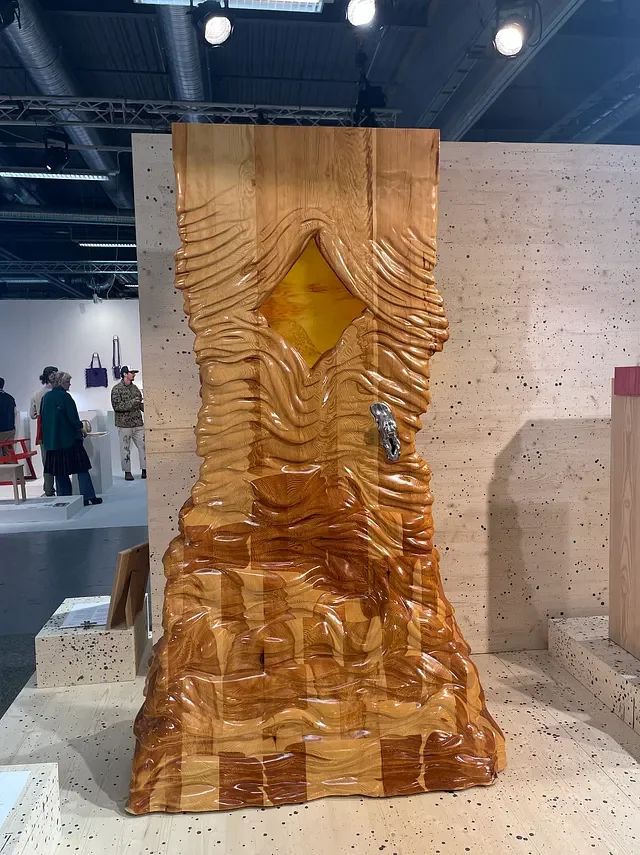


‘When the Exit Sign Shines Brighter Than Welcome’ by Malin Norberg, Stockholm Furniture Fair 2024
I’ve said it before, and I’ll say it again: the best pieces for your space exist in your local art studios. Take, for instance, ‘When the Exit Sign Shines Brighter Than Welcome’ by Malin Norberg. Crafted from a single, massive pine, this ‘melting’ door evokes a Dalí-esque motif, and explores the transitory role of doors in interior design. “Symbolically and metaphorically [doors] can both open a portal and be a physical boundary that takes us from one world to another…the border between imagination and reality.” While impractical for conventional use, this piece epitomizes ingenuity and craftsmanship.
UN/NECESSARY, a series of student work from the Art Academy of Latvia, also stood out. These designers were challenged to innovate product design through the lens of the unnecessary, and the results did not disappoint. Project examples include glasses students can wear in class to appear awake, or cutlery that transforms into unexpected forms.
In essence, the Greenhouse exhibition reaffirmed a fundamental truth: the most impactful designs are those that dare to defy convention and resist the ever-present allure of capitalism.
Rising digital fatigue prompts the interior market to prioritize tangible and interactive shopping experiences.
Really, when was the last time you bought a sofa online? It sounds simple, but when purchasing items for a physical space, the in-person shopping experience is paramount — from textures and acoustics, to comfortability. If you can transform the product into an opportunity for community development, even better. Energizing your customer by creating a memory or facilitating a new connection will give you much stronger brand loyalty than any free sample could.
Ikea is already implementing this practice through hosting raves as a part of their new customer experience strategy. See also Refinery29’s funhouse, 29Rooms, or Nike’s House of Innovation.
Plenty of brands at Stockholm Design Week were already embracing this shift too. Immersive VR experiences, sticker polls, and simply sitting in every chair possible were all much more engaging and memorable than merely browsing socials. In an age dominated by virtual interaction, the allure of real-world engagement remains as potent as ever.
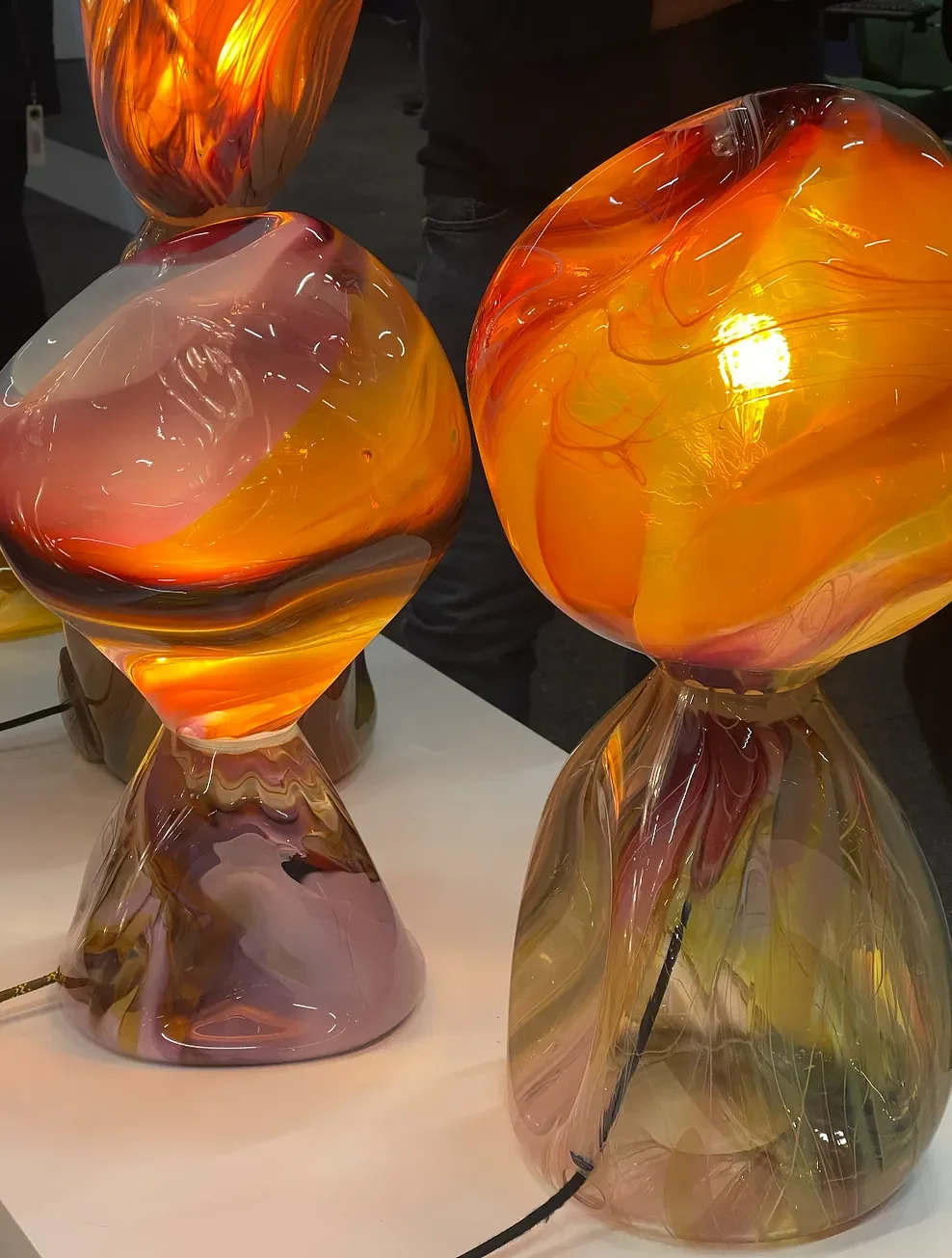
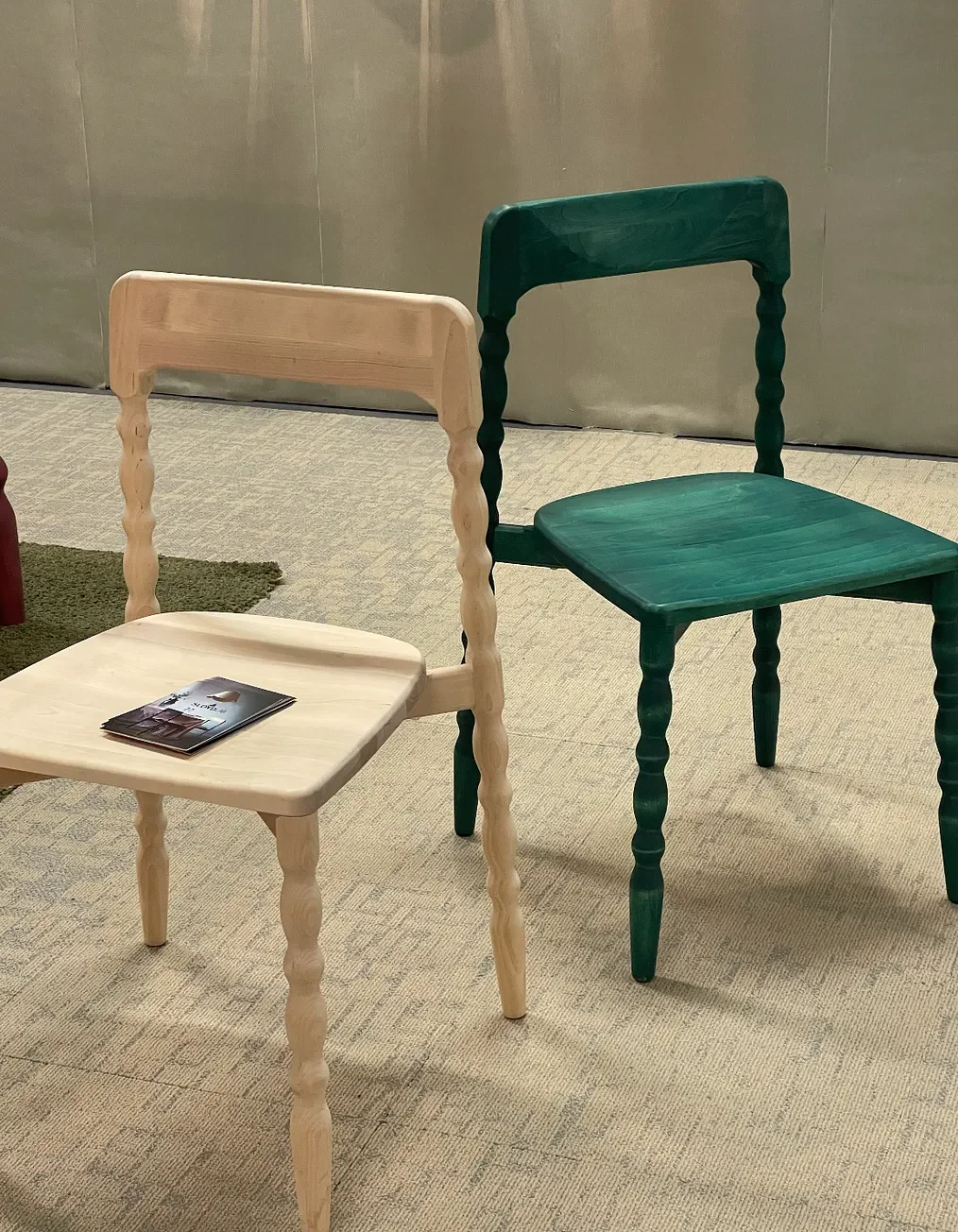
Stockholms Glasbruk handblown lamps, SloydLab chairs, Stockholm Furniture Fair 2024
Awe is fundamental to degrowth.
On the closing day of the Stockholm Furniture Fair, journalist and trend forecaster Stefan Nilsson delivered a presentation on design trends for 2024. Going into the talk, I expected consumer-based trends like ‘mauve’ or ‘wood paneling’, similar to content regularly flooding my ‘For You’ page. To my surprise, his presentation delved into topics such as global economics, mental health, and the public’s relationship to the digital world. In light of late-stage capitalism, Nilsson unveiled an intriguing trend for the year: happiness and awe. While some companies (like Happy Paul) are incorporating this trend into their brand strategy, Nilsson proposed the more compelling notion of awe as a vehicle for degrowth.
Practicing gratitude and cultivating awe for the objects, spaces, and experiences already in our lives has the potential to radically alter our consumption habits on an individual level. Only from here can we begin to reimagine our relationship with material goods and pave the way for a more sustainable future.
References
Minus Furniture. (2024). The Minus Way. Retrieved from https://minusfurniture.no/.
The Plus. (2024). Vestre will build the world’s most environmentally friendly furniture factory. Retrieved from https://www.theplus.no/en.
(2024). UNG Svensk Form. Retrieved from https://ungsvenskform.se/wp-content/uploads/Katalog_USF_2024.pdf.
Nilsson, Stephan. (2024). “2024 Interior Design Trends.” Presentation delivered at Stockholm Furniture Fair, Stockholm, Sweden, February 17, 2024.